A good metaverse
Which came first eggs—Culture— or chickens—Innovation?
EGGS OR CHICKENS
Which came first eggs—Culture— or chickens—Innovation?
Apparently eggs came first, but not chicken’s eggs. Chickens came later following different authors in evolutionary biology. [1]
Innovation-led by science fiction literature or sci-fi-literature-based innovation is a reality. Students in the MIT course on 21st sci-fi literature envisions possible technological drifts based on literature [3]. Not surprised that with people reading less and watching more dystopian streaming TV series—HBO’ Black Mirror, BBC’s Years on Years—we are on the verge on creating something really undesirable.
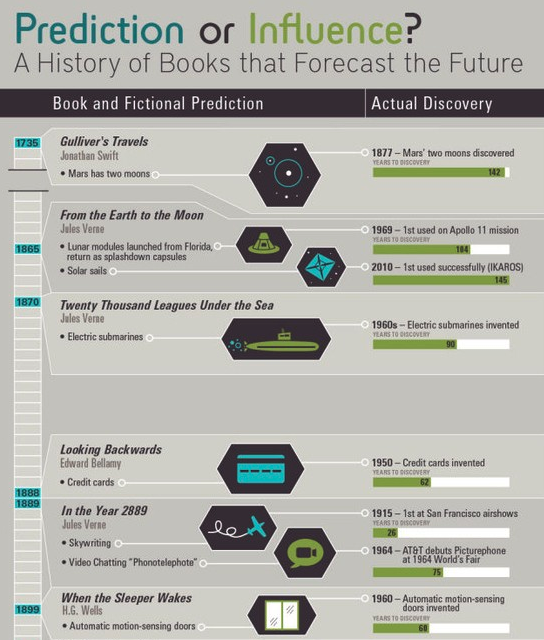
Maybe the challenge of our society is to escape from all those narratives and starting focusing on more peaceful, harmonious, and appealing versions of the future we are ALL crafting in the present moment.
Another way to take advantage of the pervasive dystopian narratives we are all exposed to, is to run pre-mortem analysis of our desirable future. It’s time for us all to kick this off.
Attention and Intention
Some years ago a transpersonal teacher, Leonor Langa, shared with me a beautiful mantra:
“where you place your attention is where you place your energy”–Joe Dispenza
Mark Zuckerberg surprised us this week announcing his envisioned drift for the next 10-20 years of the Internet, the Metaverse [4]. A new reality where pervasive AR and VR will merge with our existing physical life creating a new reality—and also the foundation of Facebook’s new revenue streams beyond the limitations imposed by Google’s and Apple’s platforms and absolute domain of mobile Internet.
Whether you like or not, Zuckerberg’s envisioning exercises are a revolutionary attempt to step ahead of its competitors and also rejuvenates its already aged and churning target audiences due to the emergence of TikTok, Snapchat and so many others social networks.
The challenge is not to create a second generation of social networks, the issue here is to observe that social networks have diminished and are diminishing our already ill attention. My view of the actual lightspeed changing reality is that keeps certain degree of resemblance with the increasing diagnosis of autoimmune diseases. Likewise autoimmune diseases attack and harm healthy organs and cells in our bodies, social networks and the Internet of mobile things has already attacked our until-now-healthy attention, draining our energy and minimizing our innovative efforts to design a good life for every existing human being on this planet.
The challenge is not to create a second generation of social networks, the issue here is to observe that social networks have diminished and are diminishing our already ill attention.
We might not know the causing root of these autoimmune diseases and truth be told, they attack and sometimes kill essential cells and systems of our beautiful harmonious biology. Social networks have already demonstrate their ability to cause harm to democracies and to diminish self-confidence in teenagers. Maybe it is time to revitalize our former harmonious maybe-not-so-beautiful coexistence and start imagining a good life for all of us. And that begins with writing new narratives about what a good life on this planet means.
A good Metaverse
By envisioning a good metaverse, we will run away from Black Mirror’s dystopian drifts and start seeding what we think now it will be a desirable future.
To start seeding a desirable vision of a good metaverse, here are my thoughts:
- A good metaverse should be a trustworhty platform. Conceiving a digital future where trust is not a nice-to-have but an ex-ante requirement. And that means preserving humans in control of their data and also making the creators of any platform or technology to be liable whenever transparency, oversight and accountability are not granted.
- A good metaverse should offer by default freedom to control my data. And that begins with making data interoperable, portable and traceable. Which in other words should be about letting each and every user to have access to the data memory of their actions on he metaverse.
- A good metaverse should aim for sustainability in a digital context. Understanding sustainability under three basic pillars: Socially sustainable–meaning egalitarian, accesible and non discriminatory; Environmentally sustainable, and Regulatory sustainable–meaning compliant with actual regulations and ethically robust.
- A good metaverse should be built on humanistic-first ground rules. And that implies to drive in advance a set of pre-mortem analyses of undesirable futures. Most of these pre-mortem analyses start with observing today's Internet: It can’t be owned exclusively by tech juggernauts. It has not to be engagement-first based in order not to alter democracies or harm kids. It has to offer certain degree of balance regarding data value extraction among companies, developers, creators and end users. It has to be healthy and not harmful for kids and easy to control for parents.
The conversation is open.
Most of these previous thoughts are extracted from a collaborative exercise built back in December 2020 with a group of alumni of my executive program in Digital Transformation at IE Business School titled "For a Sustainable Digital Future"[7]. Although in Spanish, I do recommend using simultaneous translation for those interested in reading that great pro-bono exercise.
A complete set of rules of engagement for this new metaverse future were set by Matthew Ball later on this year [5] and previously in January 2020 [6]. Do not miss the opportunity to read them all. It’s been an inspiring and generous exercise already done by Matthew Ball.
This article is an incomplete attempt to co-create a good vision for the metaverse. Quoting MZ’s invitation[4] :
”The metaverse will not be created by one company. It will be built by creators and developers making new experiences and digital items that are interoperable and unlock a massively larger creative economy than the one constrained by today’s platforms and their policies.” –Mark Zuckerberg. Oct 2021.
It is on us to collaboratively write the sci-fi literature of today’s present on which innovative minds will design tomorrow’s future. Do you want to take part?
Inspirational sources:
[1] https://www.science.org.au/curious/earth-environment/which-came-first-chicken-or-egg
[2] https://www.siliconrepublic.com/machines/science-fiction-future-technology
[3] https://news.mit.edu/2021/inhabiting-21st-century-science-fiction-0521
[4] https://about.fb.com/news/2021/10/founders-letter/
[5] https://www.matthewball.vc/all/forwardtothemetaverseprimer
[6] https://www.matthewball.vc/all/themetaverse
[7] https://www.bernardocrespo.com/documento-por-un-futuro-digital-sostenible/
The author
Bernardo Crespo
C-suite advisor in AI, data and strategy. CEO of Quantum Markethink and Academic Director at IE. He helps leadership teams make sound decisions in the age of AI.
LinkedIn