Can you learn while writing a book?
Over the last 3 months I have been through a writing drought (in public) and there was a reason for it. I have been immersed in writing my first book.…
Over the last 3 months I have been through a writing drought (in public) and there was a reason for it. I have been immersed in writing my first book. A debt I owed myself and wanted to settle before the year 2016 was over, and which, a year later, is still outstanding.
It is now a reality. It has taken me 21 days and 21 nights to give shape to a first draft of more than two years of work. All those reflections in the form of learnings that I have been collecting every Friday now have a shape.
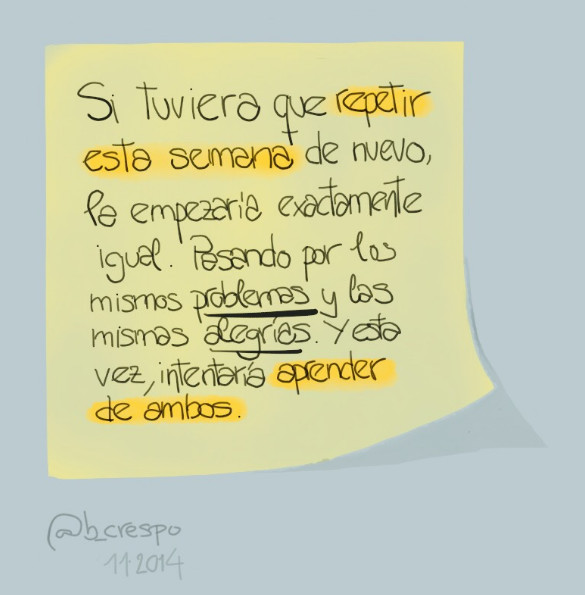
The result is a compendium of thousands of hours of learning at a personal level. It has been something like a “creative vomit” of what I consider a brief history of personal transformation in the digital age. An exercise in which I wanted to share what I personally believe the transformation process of any individual amounts to in an era of information overdose, of doom-mongering messages about what digital transformation takes away from us, of the need to manage uncertainty, and of what visualizing your own future can give you as a human being.
It is not meant to be a manual and it contains 52 lessons in the form of learnings or, as one of the anonymous participants in the survey for the book's title described them, “Learning Notes”.
It is not meant to be a guide and for me it has been one. It has been the guide I go over every week and where I stop each time I trip again over one of those learnings I stubbornly refuse to internalize. Maybe it is my ego that won't let me learn. And the learning is welcome.
It is not meant to be just any book and it will be published like any other book. Except that in this book, the reader will decide the order in which to read the chapters. I had to bring an element of play into the reading. After all, each one of us decides how we want to learn in life. And you can always choose the one I impose. And the order in which I have learned Personal Transformation in the Digital age is probably just that, my personal experience. Each future reader's order will be their own.
It is not meant to be a self-help book and personally it has helped me in the process of living each learning and, to a greater extent, in the final stage of documenting earlier reflections and notes to help put each learning into practice.
It is not meant to be a coaching manual and I can't deny there are ingredients of leadership, neuroscience, emotionality, spirituality, strategy, even a pinch of biology and philosophy. And all of it in a way that even my mother can digest without choking. And I assure you she already has. She was one of the first to go through the ordeal of reading the first draft. Thanks, Mom.
It is not meant to be an exercise in digital transformation and there are key learnings to apply in the digital transformation process of any corporation. I don't want to miss the chance to remind you that every company that decides to take on a transformation process will be driven, one way or another, to reflect on the role of cultural transformation. And that says a lot about the individuals who make up any organization. And about culture.
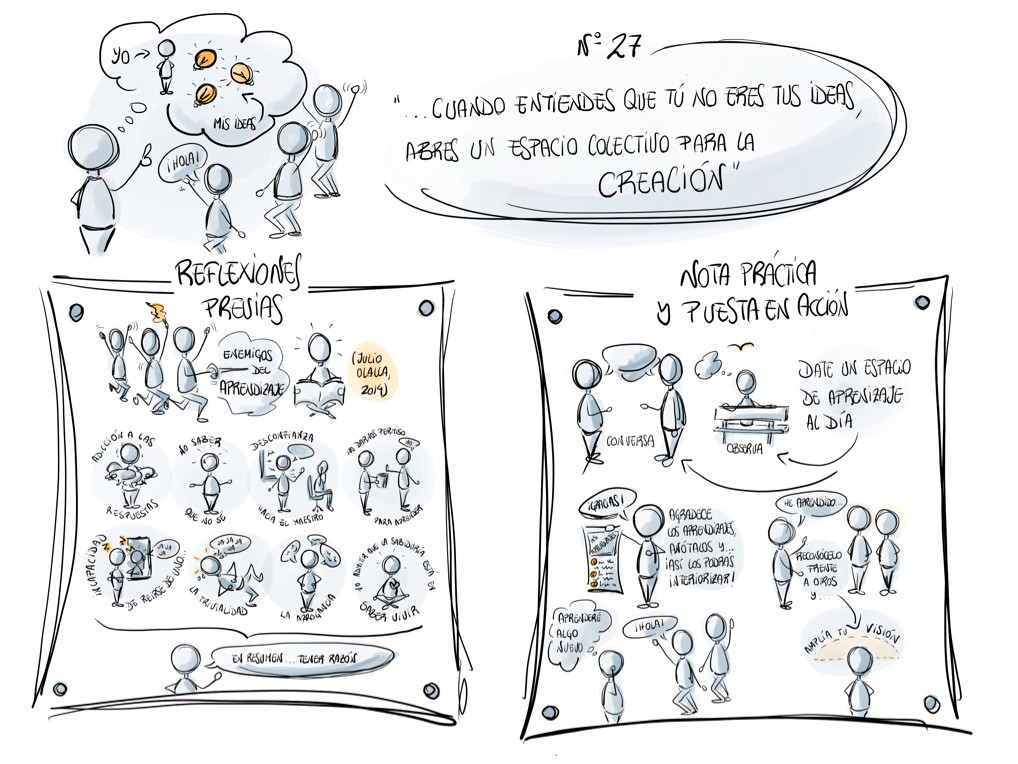
I'll leave you with one of the 52 learnings. To read the rest you will have to wait for the book to be published. I am crossing my fingers that this happens between now and the end of the year. It depends on me and also on the publisher.
If you want me to let you know when it is published, please do take part in the survey for the definitive title, because the survey is still open. And don't forget to leave your email at the end; to those of you who take part in the final title and come close to what turns out to be the final title, I'll give you a copy. I promise to be even-handed in the final selection.
The author
Bernardo Crespo
C-suite advisor in AI, data and strategy. CEO of Quantum Markethink and Academic Director at IE. He helps leadership teams make sound decisions in the age of AI.
LinkedIn