Mastering the art of data communication: Learning to speak the language of data with this simple collection of stories.
Every time I share a learning space with different organisations from the USA and Peru to Saudi Arabia and Germany, I ask myself what makes the language of data…
Every time I share a learning space with different organisations from the USA and Peru to Saudi Arabia and Germany, I ask myself what makes the language of data universal in any geography and in any culture. Perhaps it is because the language of code is what unites us most in this new digital reality that connects human beings beyond their cultures and their different beliefs. And the truth is, that's not it: my discovery is that the language of data brings together different observers on this planet because it contains something secretly wonderful: the language of imagination.
Going from the abstract to the concrete through the possibilities of data is an exercise more typical of the storytellers of the digital era than of mathematicians. And I truly believe that the work of telling stories is an enriching exercise for all cultures.
This wonderful 2x2 chart by my friend, partner and co-author of the book "The Data Mindset Playbook" is conclusive proof of this exercise:
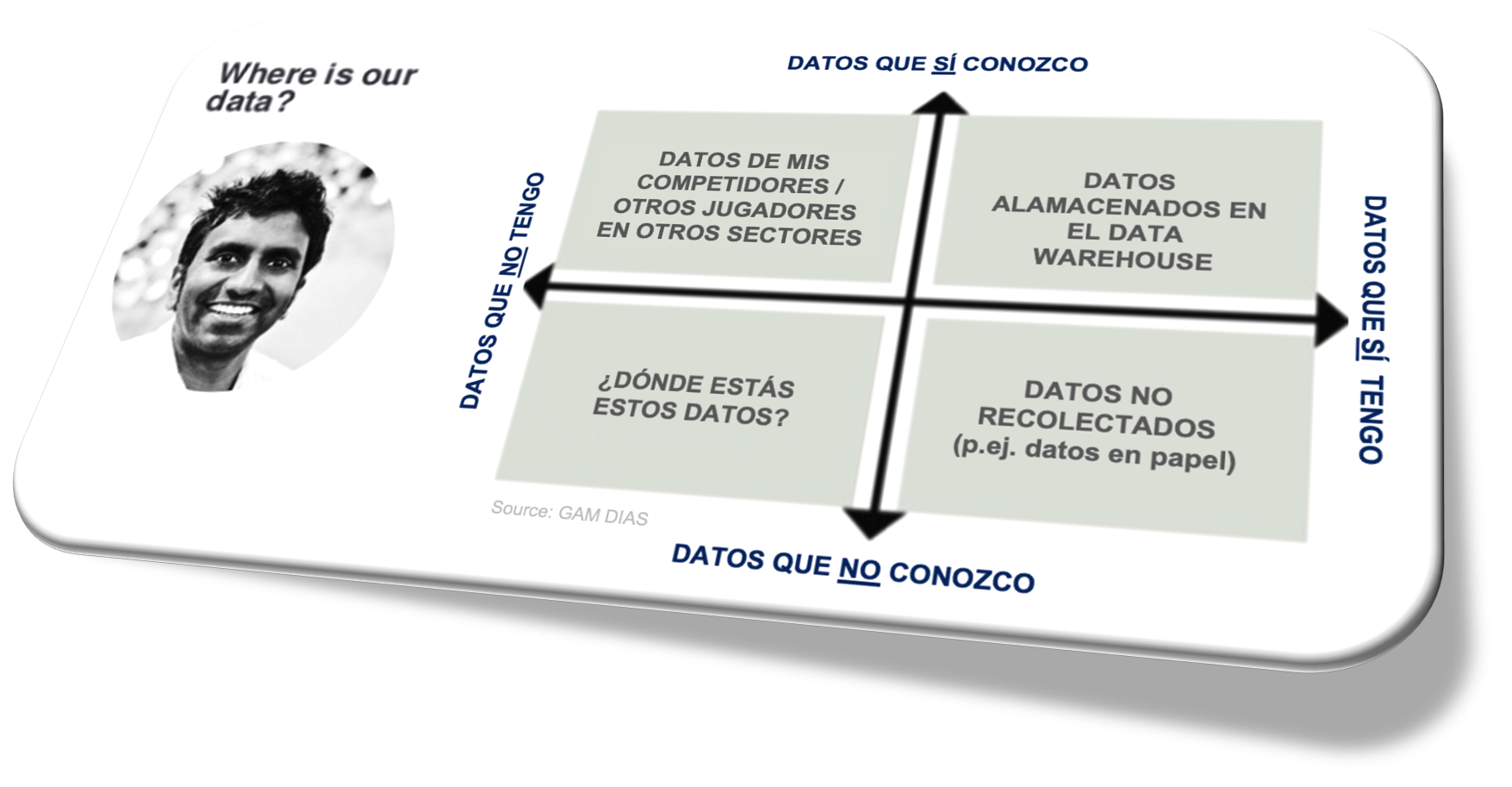
Every time I use this slide in my workshops and classes it generates an endless space of creativity for professionals from any culture. From data that belongs to the future and has not been collected, to the value of weather data and the football fixture calendar in conjunction with the data you already have in your company through algorithmic models. Helping a group of professionals connect their professional background with creativity and entrepreneurship applied to generating new data products should be the challenge for any professional today. We are all data entrepreneurs.
It may perhaps be complex to translate the ideation of a business hypothesis into an advanced analytics project. It may perhaps feel remote for an HR professional to raise the value of an algorithm that maximises the usefulness of the taxonomies in a CV matched with the same taxonomies extracted from a job advert. It may also be convoluted to imagine how to generate a predictive model from the image captures of empty parking spaces that a drone obtains flying over a shopping centre, and all these stories are the daily moves of a professional who sets out to hone the noble art of creating value using data.
When Gam Dias and I (Bernardo Crespo Velasco) decided to write the book "The Data Mindset Playbook: A Book about Data for People Who Don't Feel Like Reading about Data" we were thinking of exactly that: how to help non-technical people join the data conversation. There are already enough expert data professionals and there is also a fundamental gap in companies, the lack of diversity in the definition of data-intensive projects.
The lack of diversity is what leads solutions like ChatGPT to fear any foray into writing stories with Muslims, companies like Tesla to be unable to make their self-driving solutions work properly in the snow in Canada, or any generative solution to get the definition of elements wrong, elements that introduce cultural nuances that were never conceived of in the design phase. For example, how do you describe the smell of wet earth on a summer afternoon after the rain? There are cultures and languages that have linguistic nuances to describe this question perfectly in a single word. And sadly mine is not one of them.
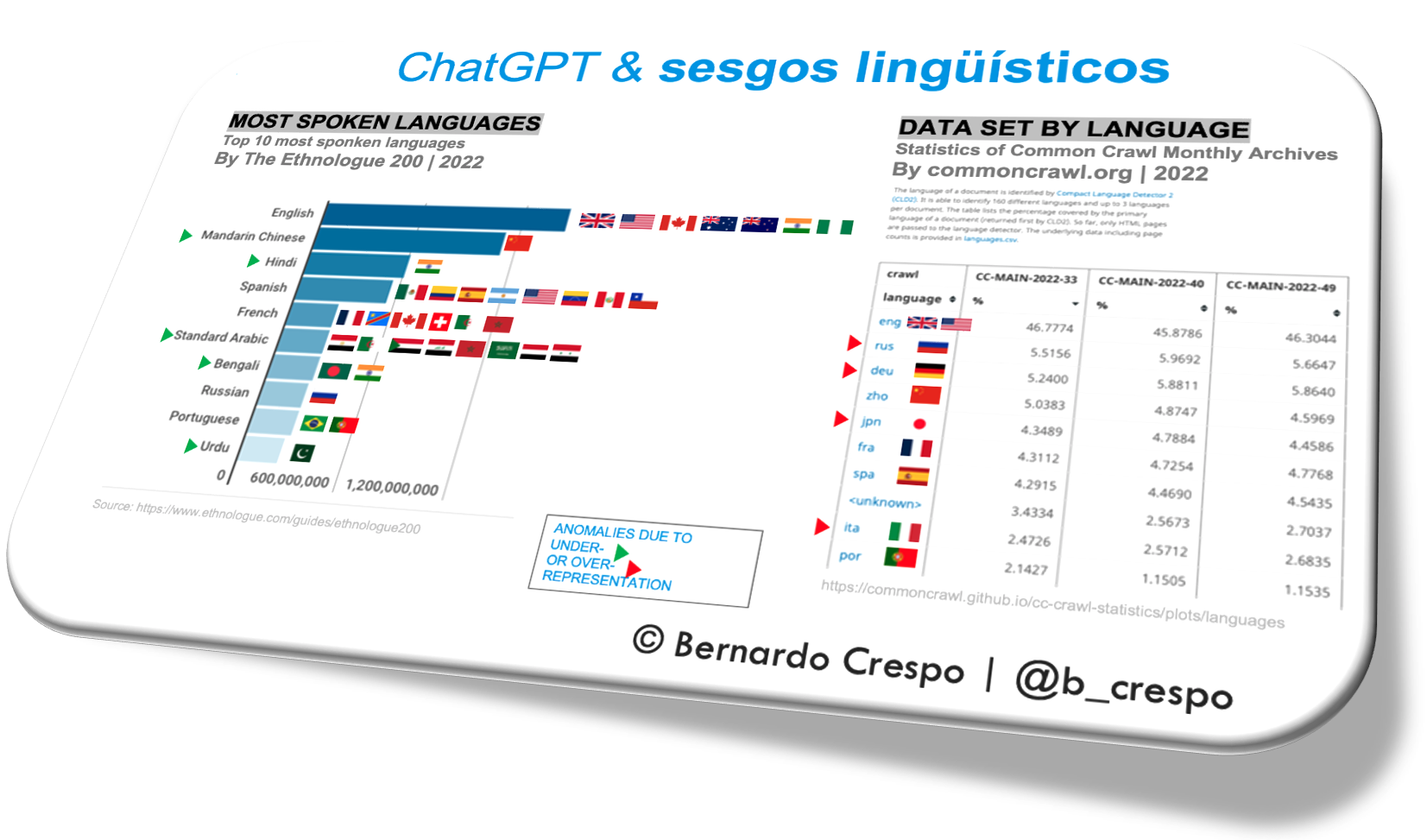
Language conditions and generates a reality for each observer. A model by definition is the simplification of reality. When we build algorithmic models we leave out cultural richness, and that conditions our ability to simplify reality on the basis of the cultural profile of the participants in any data project. However, stories unite us and create a dreamlike world that is perhaps the most universal language on the planet. Apparently there are more than 7,000 languages on planet Earth (Ethnologue) and barely 200 countries (UN). Can we even begin to imagine how linguistic and cultural diversity may be conditioning the definition of algorithmic models in the era of generative AI?
Doing the exercise of contrasting the most spoken languages on the planet with the original language of the websites that made up 66% of GPT-3's data source (Common Crawl), the divergence is dizzying:
Rescuing diversity through stories has been our purpose with this book. Turning to telling data stories instead of complex models or frameworks is the intention that underlies it. Writing a compilation of data stories, our own and other people's, to help experts not initiated into the noble art of data to be able to commit to memory "tales" that illustrate the possibility of creating data products, enriching predictive models, and even fostering critical thinking and the responsible use of AI. A challenge that has come to be called the push for data literacy among all professionals in their daily decision-making.
“Data are just summaries of thousands of stories—tell a few of those stories to help make the data meaningful.”~ Dan Heath
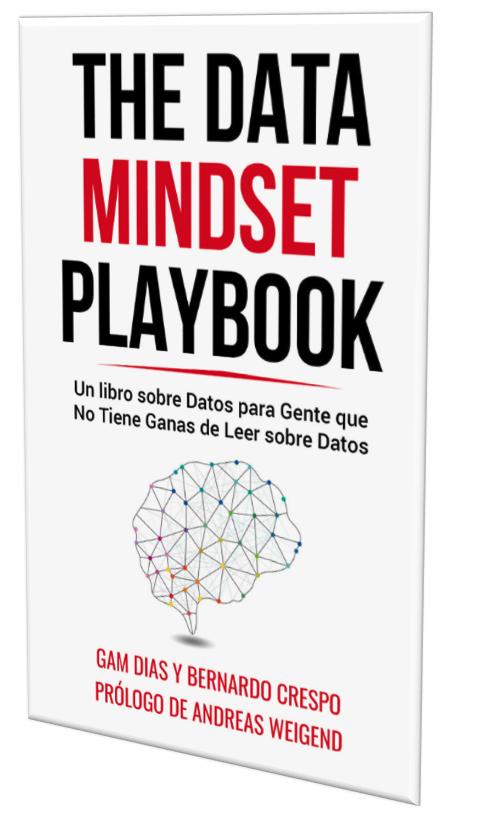
Quoting Dan Heath: "Data are just summaries of thousands of stories: tell a few of those stories to help make the data meaningful". This book, which has been available in Spanish since March 17, 2023 and in English since October 2023, brings together 52 data stories that can be read weekly over the course of a year or, if you are a bookworm, in under a couple of hours (the length of a flight between Madrid and Dublin).
We truly hope from the heart that reading this book helps to create a multidisciplinary conversation among all the professionals of the world around the possibilities of data.
[Disclaimer: This post has not been written using any generative text model, with the exception of the title ;-)]
The author
Bernardo Crespo
C-suite advisor in AI, data and strategy. CEO of Quantum Markethink and Academic Director at IE. He helps leadership teams make sound decisions in the age of AI.
LinkedIn